Premiere 10 September 2026 AMOS-stage
Duration: 1 h 45 min, no intermission
Performing rights: Agency North / Colombine Teaterförlag
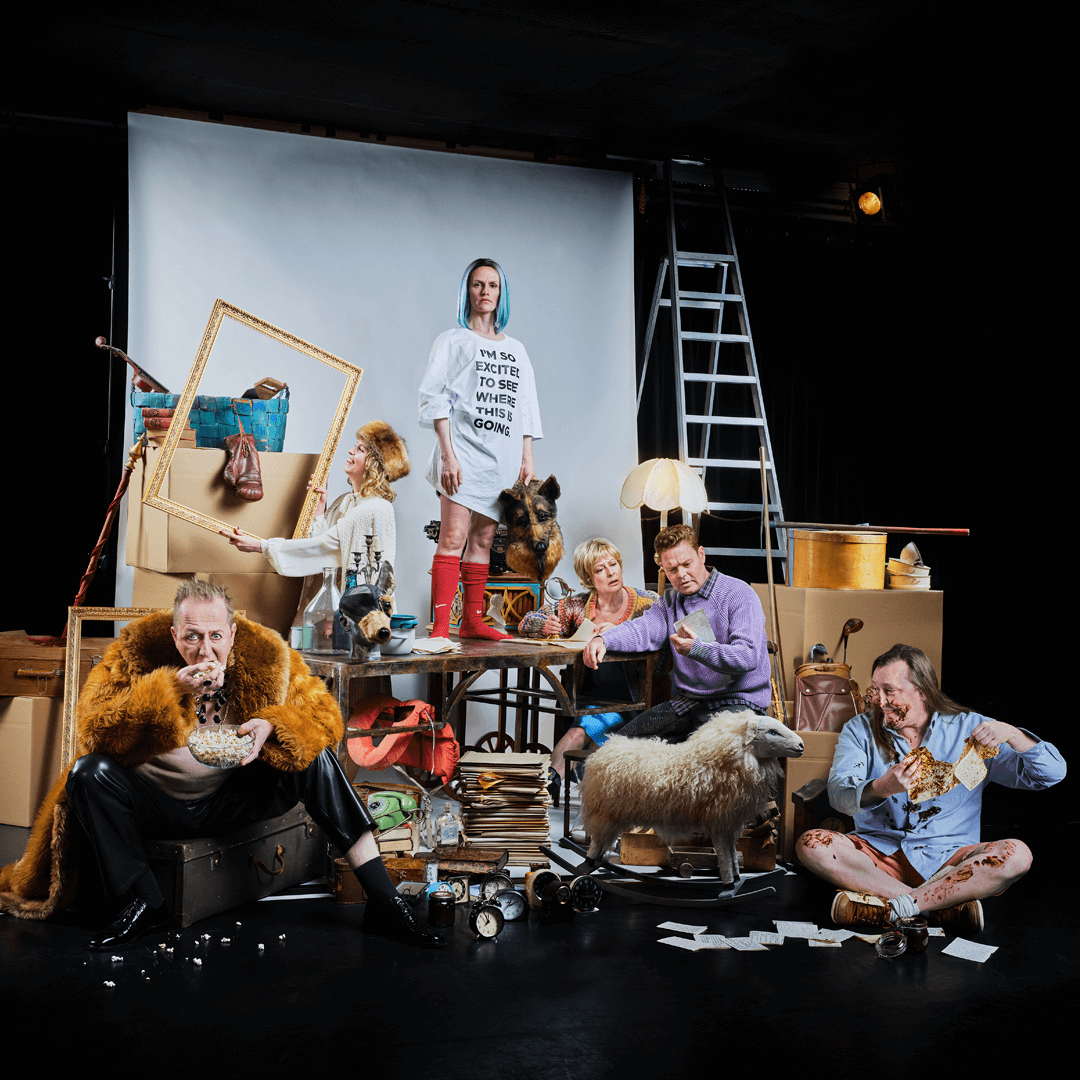
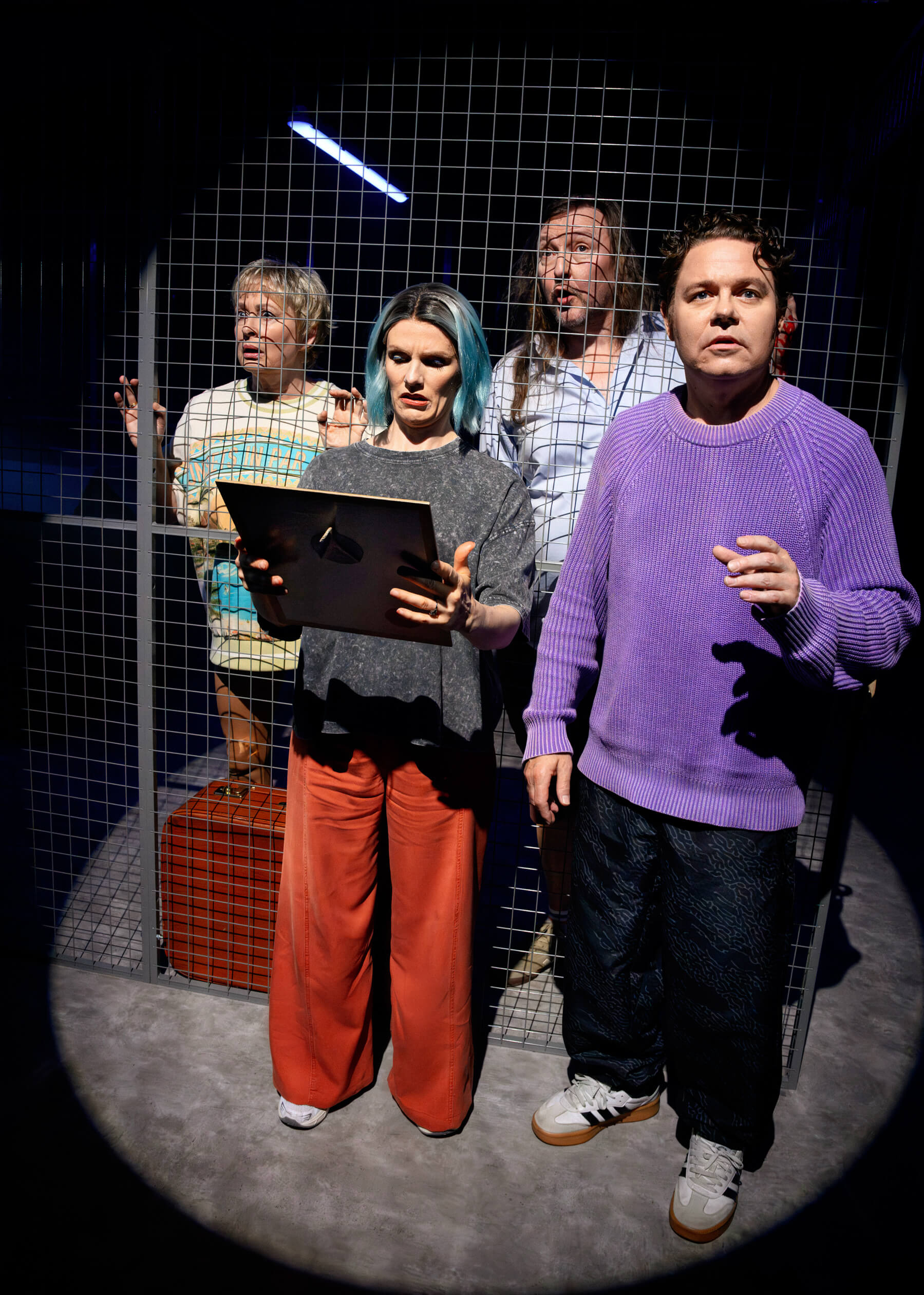
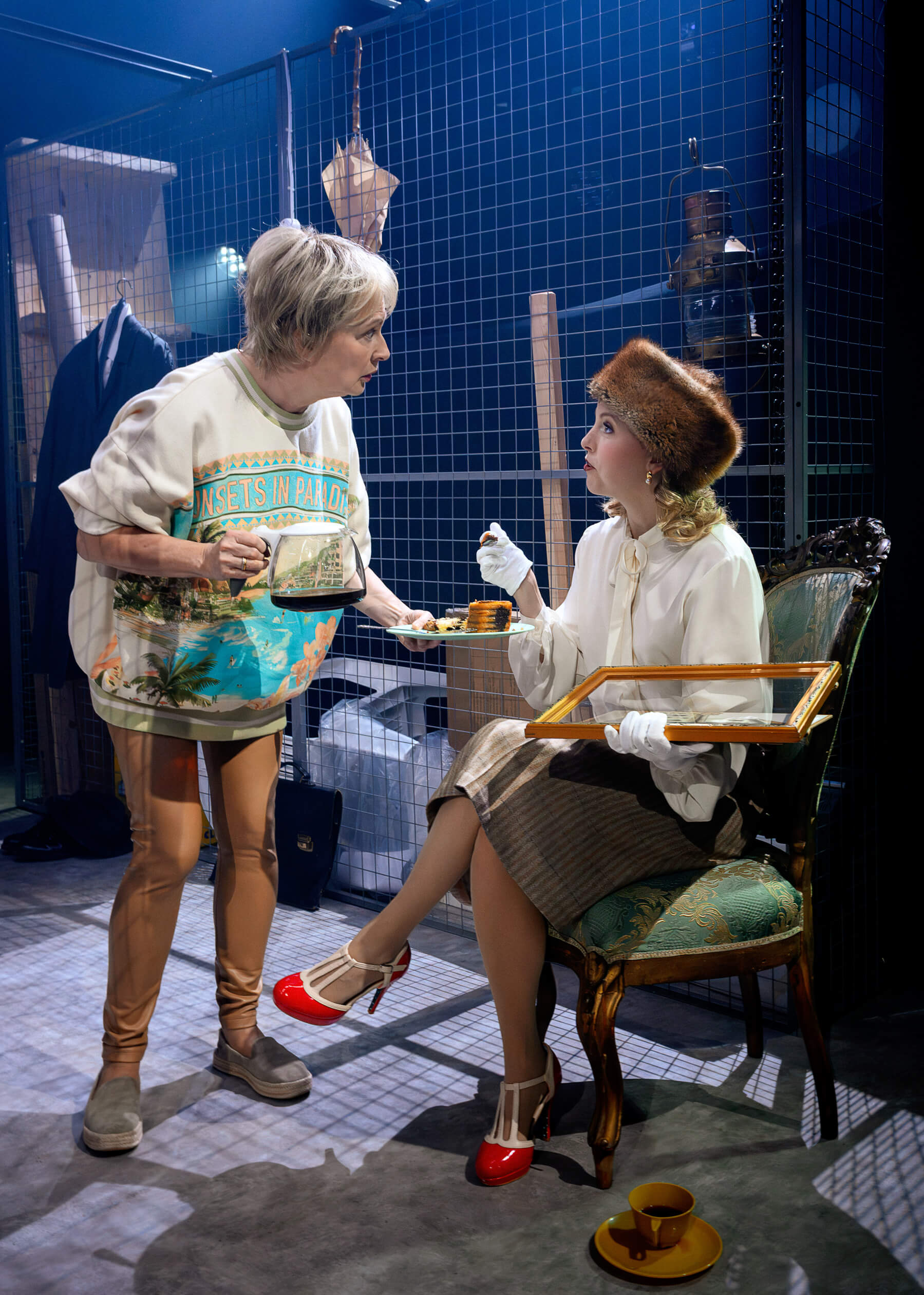
Marius von Mayenburg’s Nattland is an intelligent black comedy. When I first received the script from the theatre to read, I was immediately drawn to the challenge. Firstly, contemporary German drama is very seldom produced in Finland, and political plays are rare. In Nattland, Mayenburg brings politics onto the stage through individual points of view. Nattland does not claim to provide political answers or even to take a stand one way or another; mostly, it aims to raise topical questions. It is a conversation about humanity – a playing field that uses the methods of German theatre to examine how to discuss difficult issues. It is also a way of taking the issues to extremes.
What intrigued me in the play was the rhythm of the text and its theatricality. I love Mayenburg’s way of playing with the fictional story by parsing it to the audience with the occasional use of narration. This fits brilliantly with my way of doing theatre. I graduated as a director from Zurich University of the Arts in 2025 and I still live in Switzerland. I work in both Finland and Central Europe. I feel that my personal aesthetic is perhaps more influenced by German than Finnish theatre. The performances that I have found most impactful I have seen in German-speaking countries. Therefore it also feels somehow comfortable for me to direct Mayenburg’s German-style text.
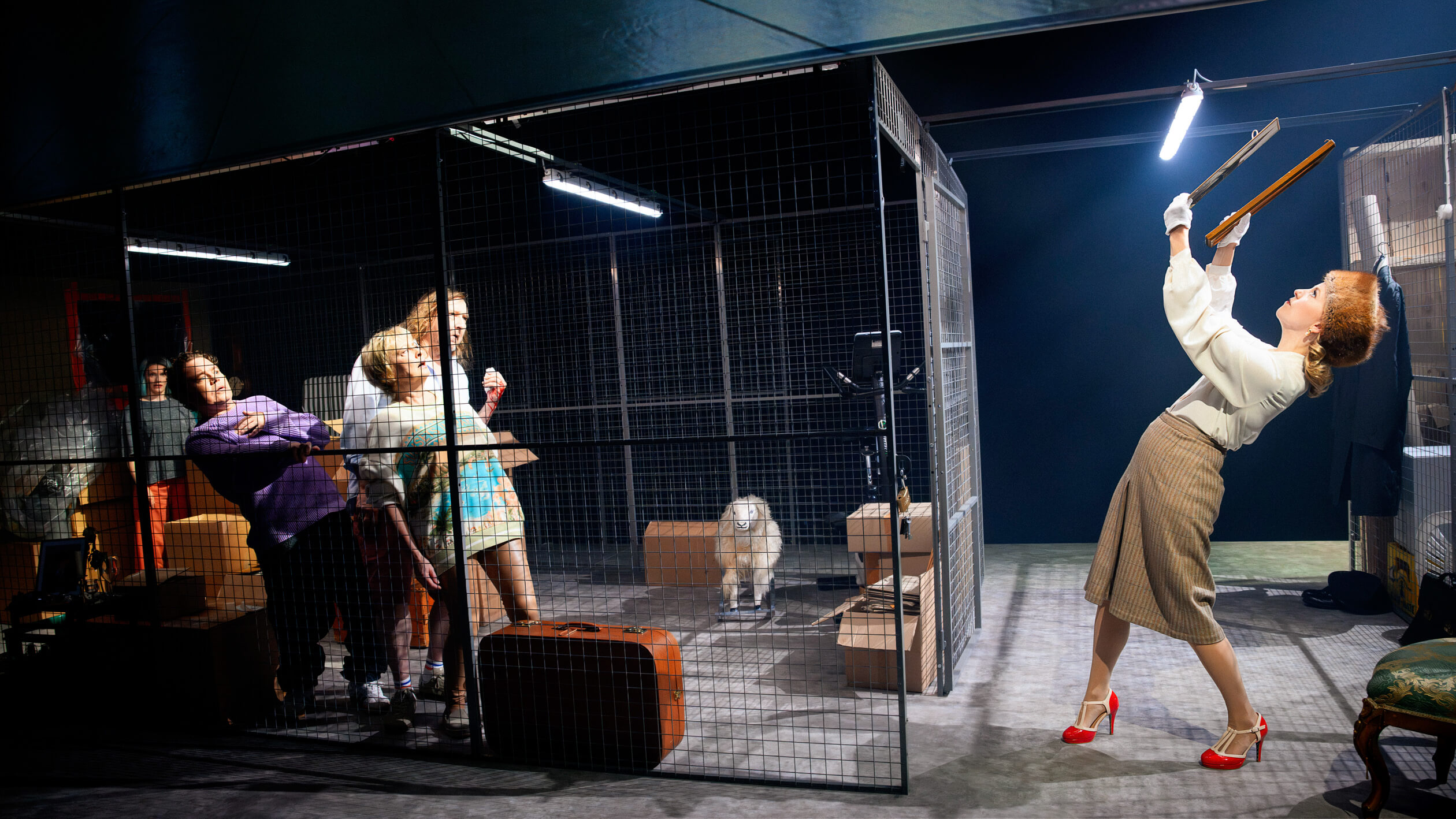
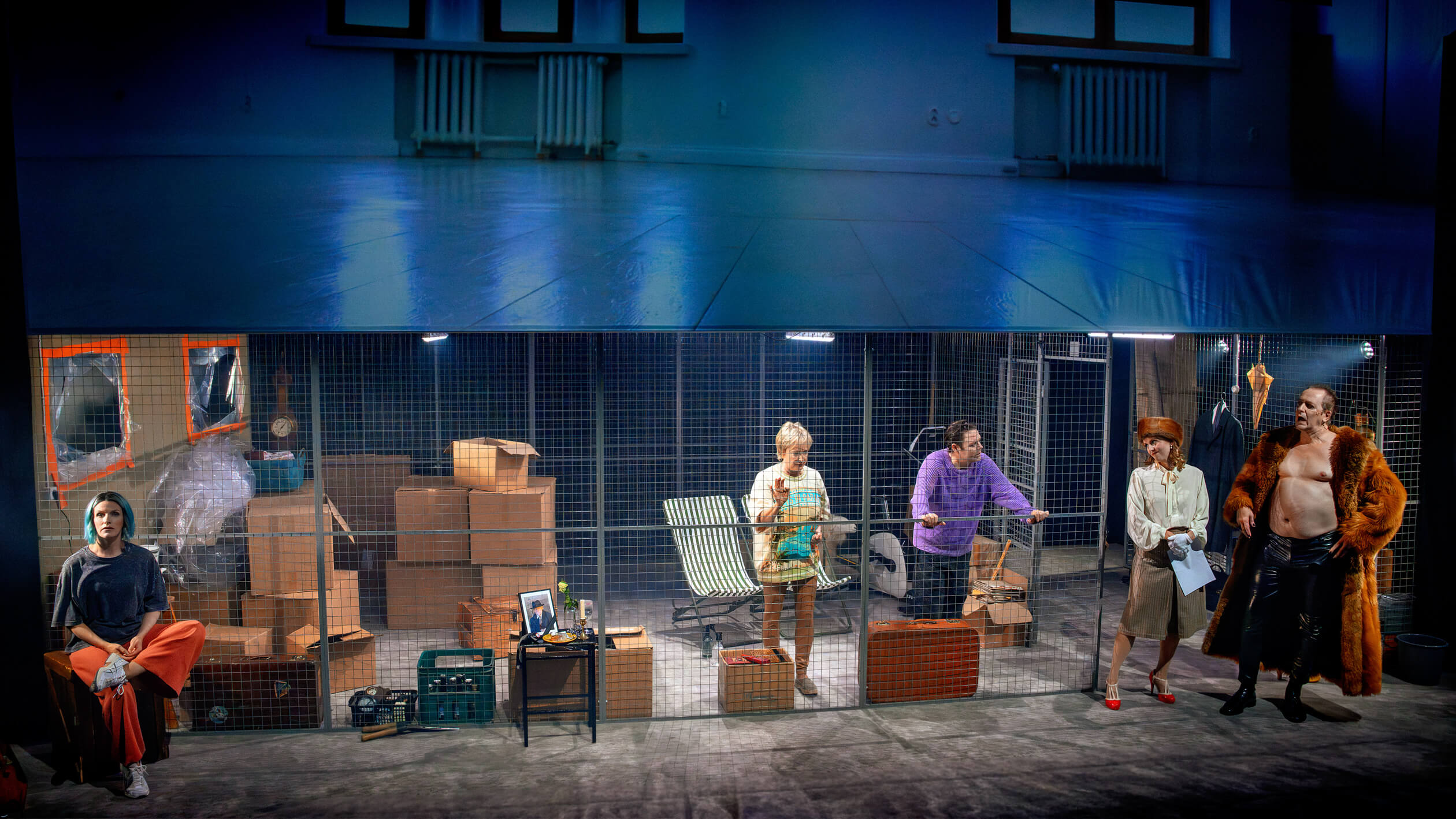
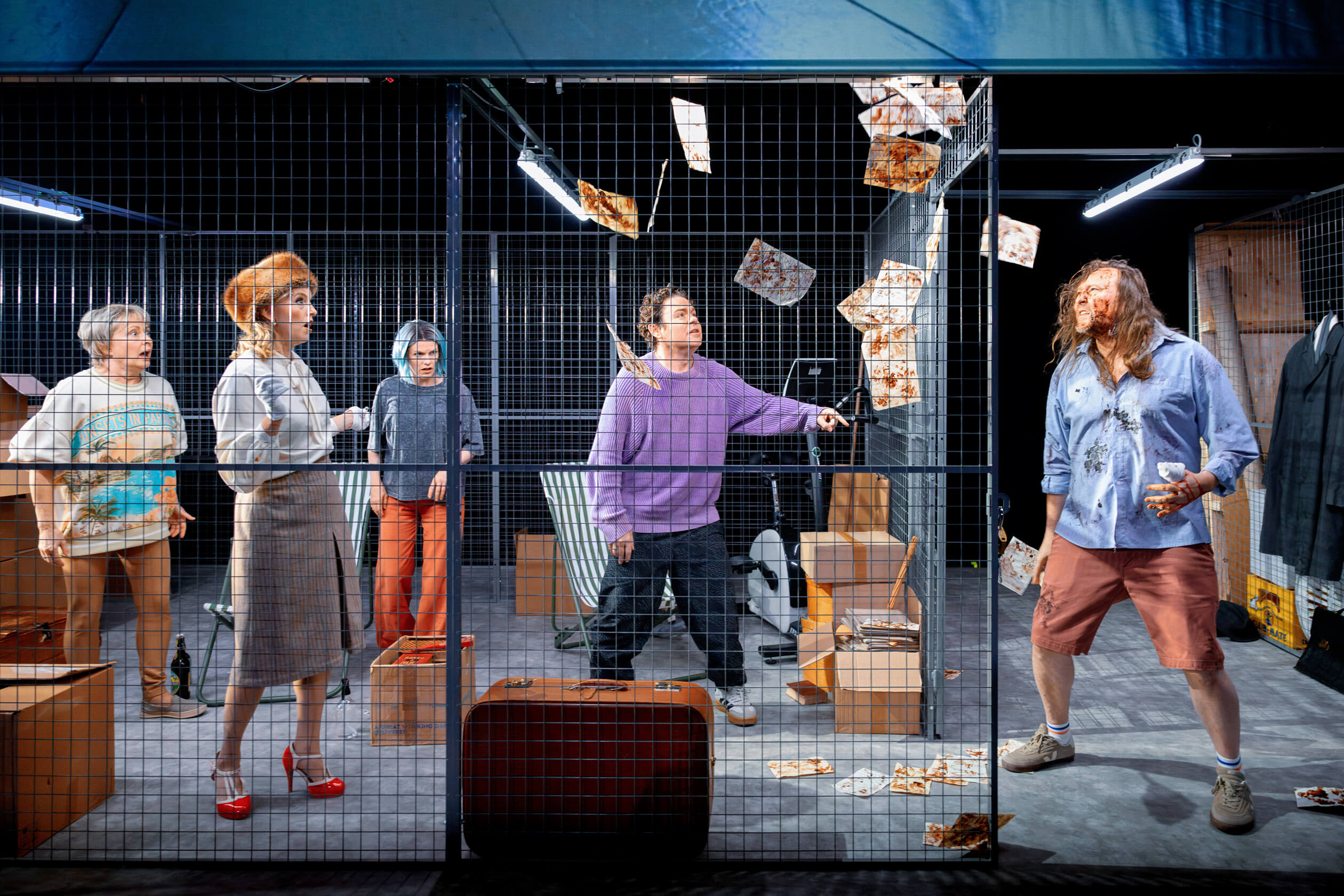
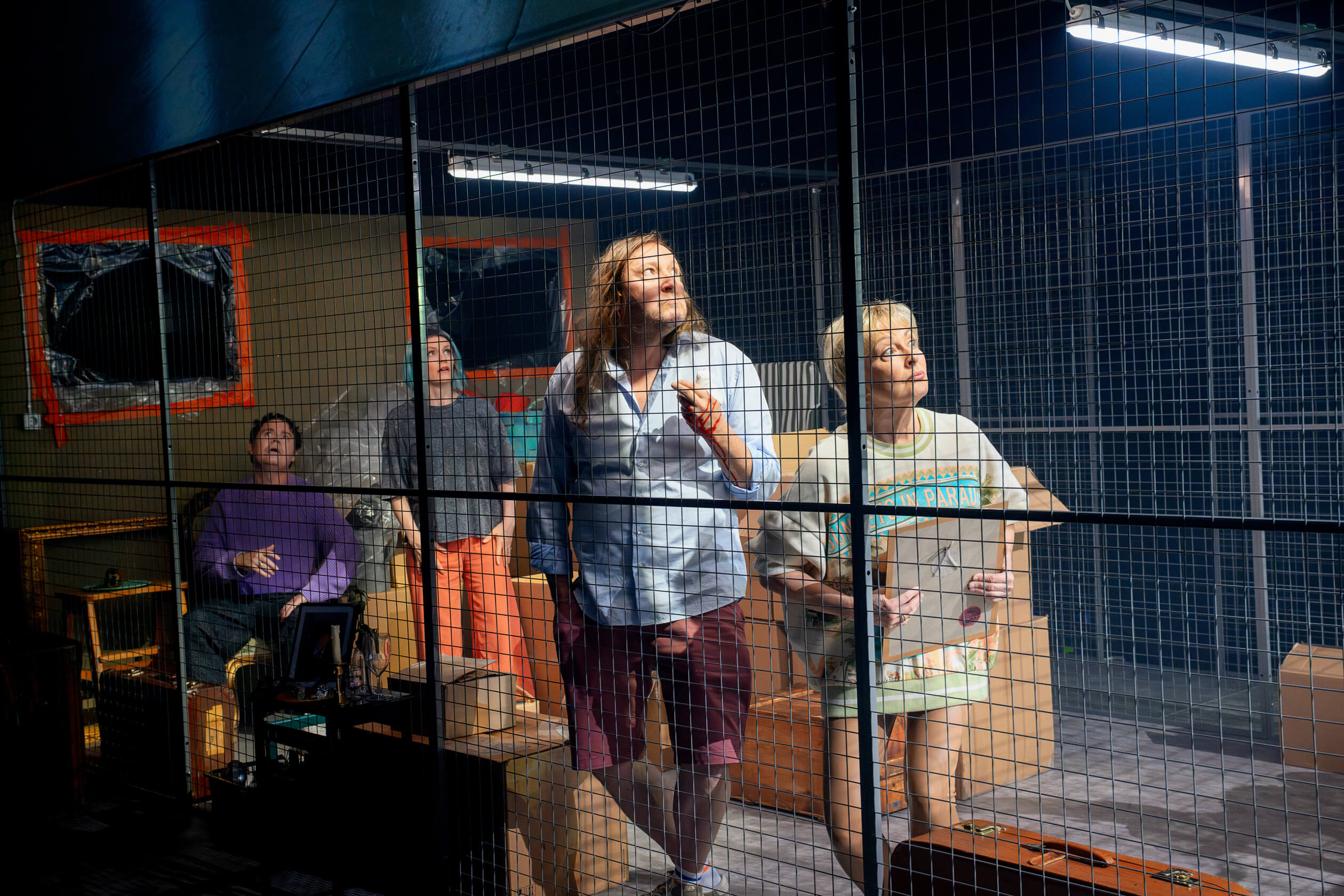
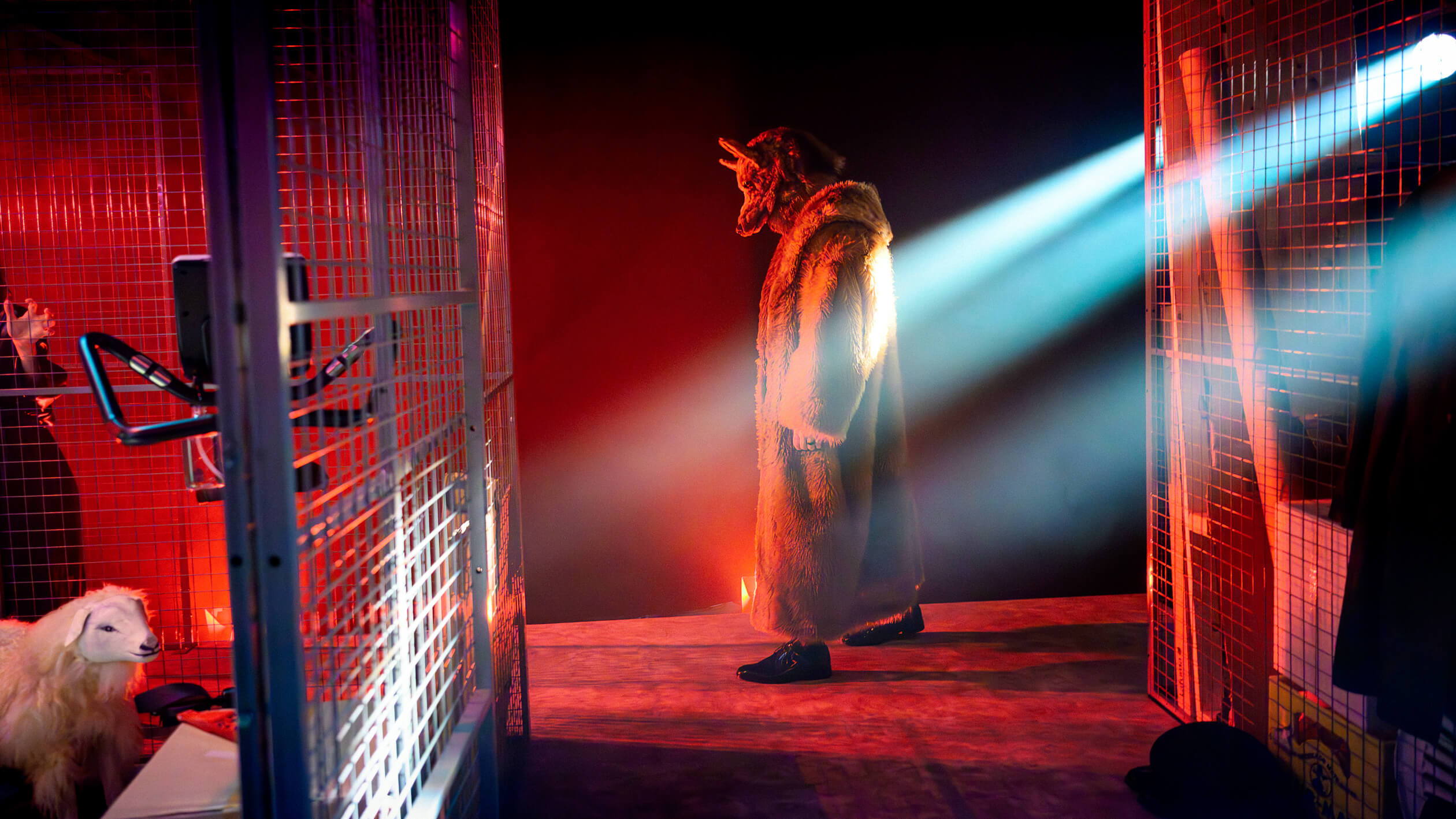
Mayenburg’s Nattland is primarily a dialogue play, but I have contributed my own touch by adding video, physical movement and canine figures to the performance. In pondering the play’s aesthetics, I received a strong impression of German Shepherd dogs. This impression was reinforced from many directions and so we decided to add the dogs to the work. For me, the dogs represent above all the structural racism that exists in many layers in society. Already at the planning stage, I found the canine motif running so naturally through the whole thematics and text that it developed into an important part of my direction.
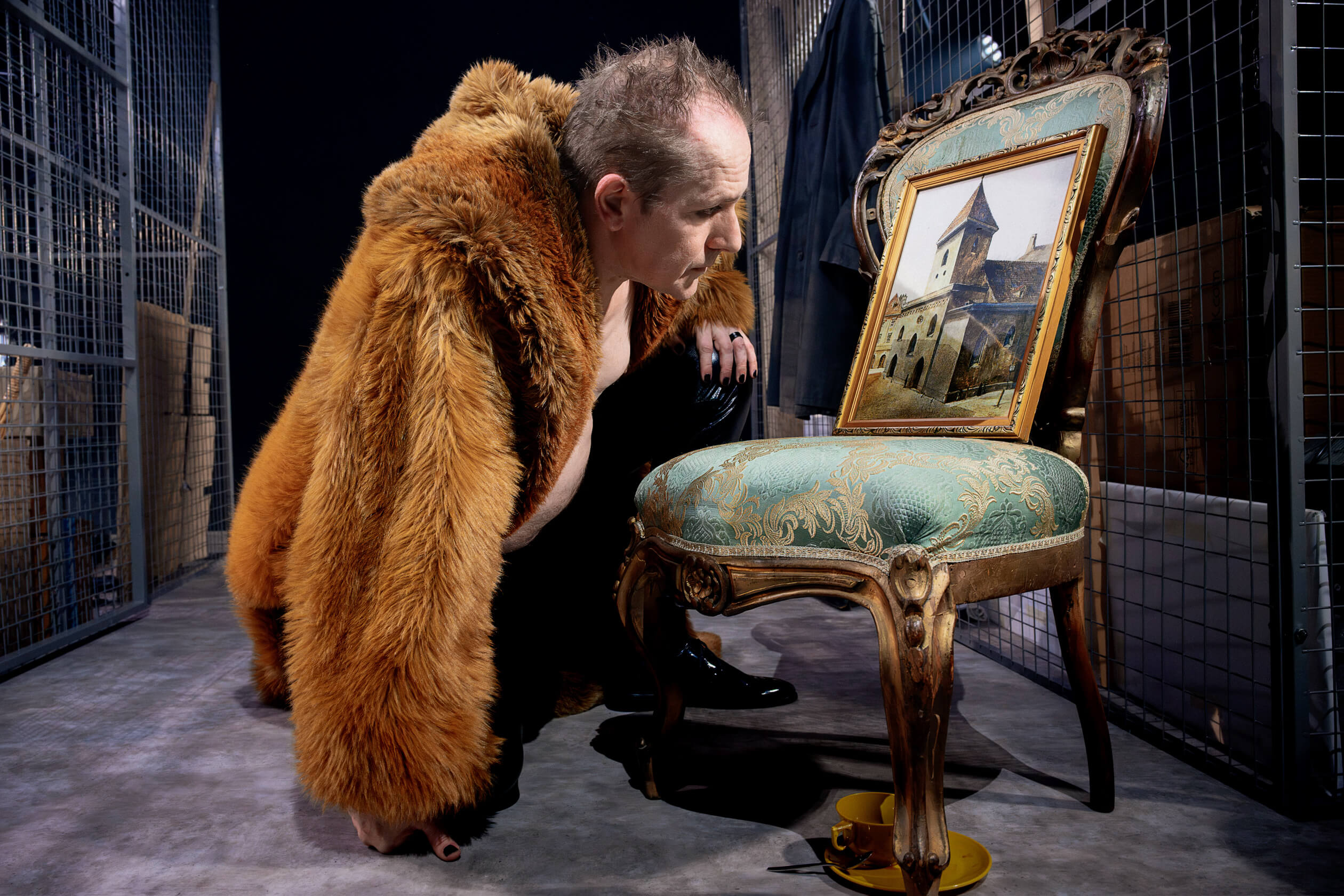
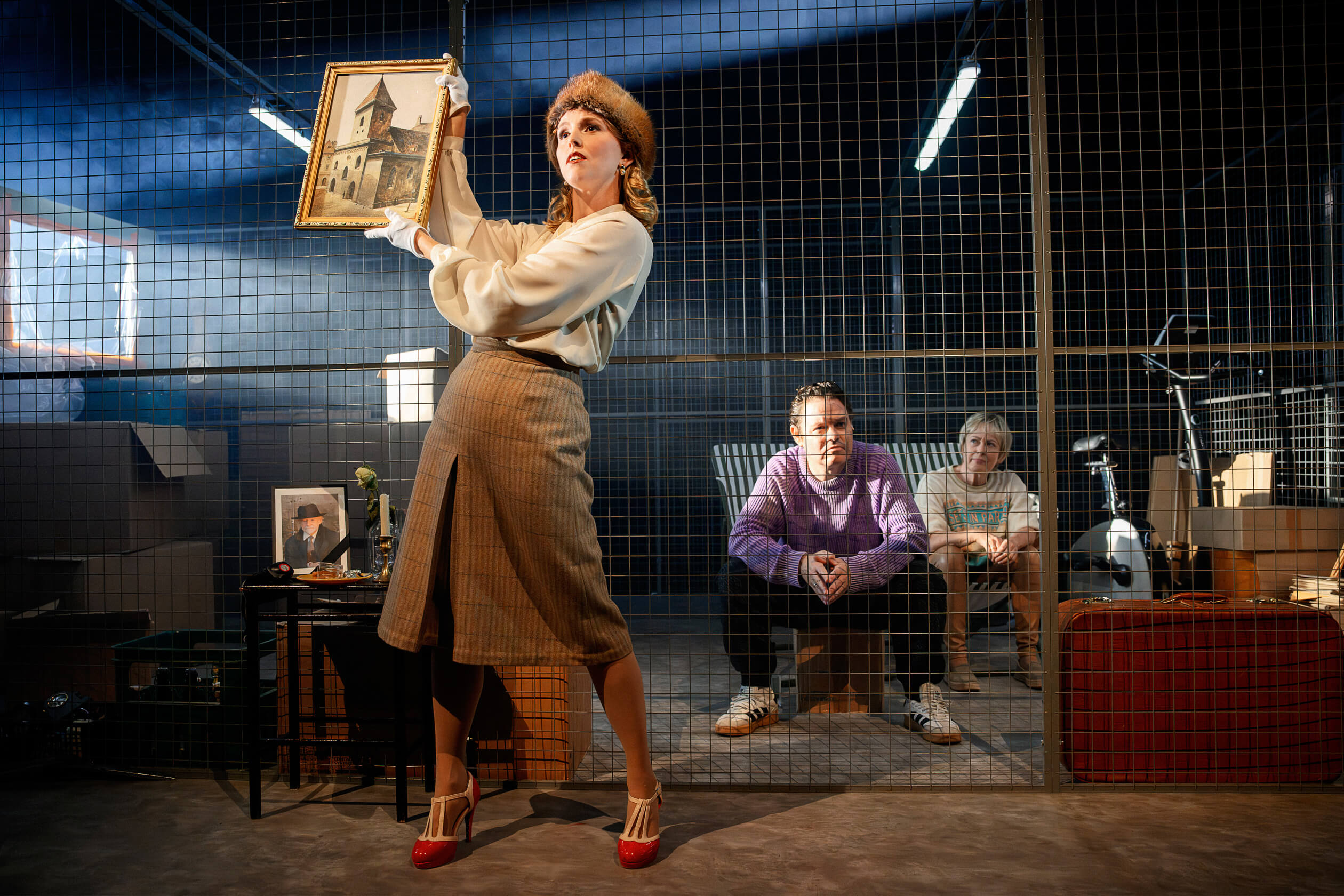
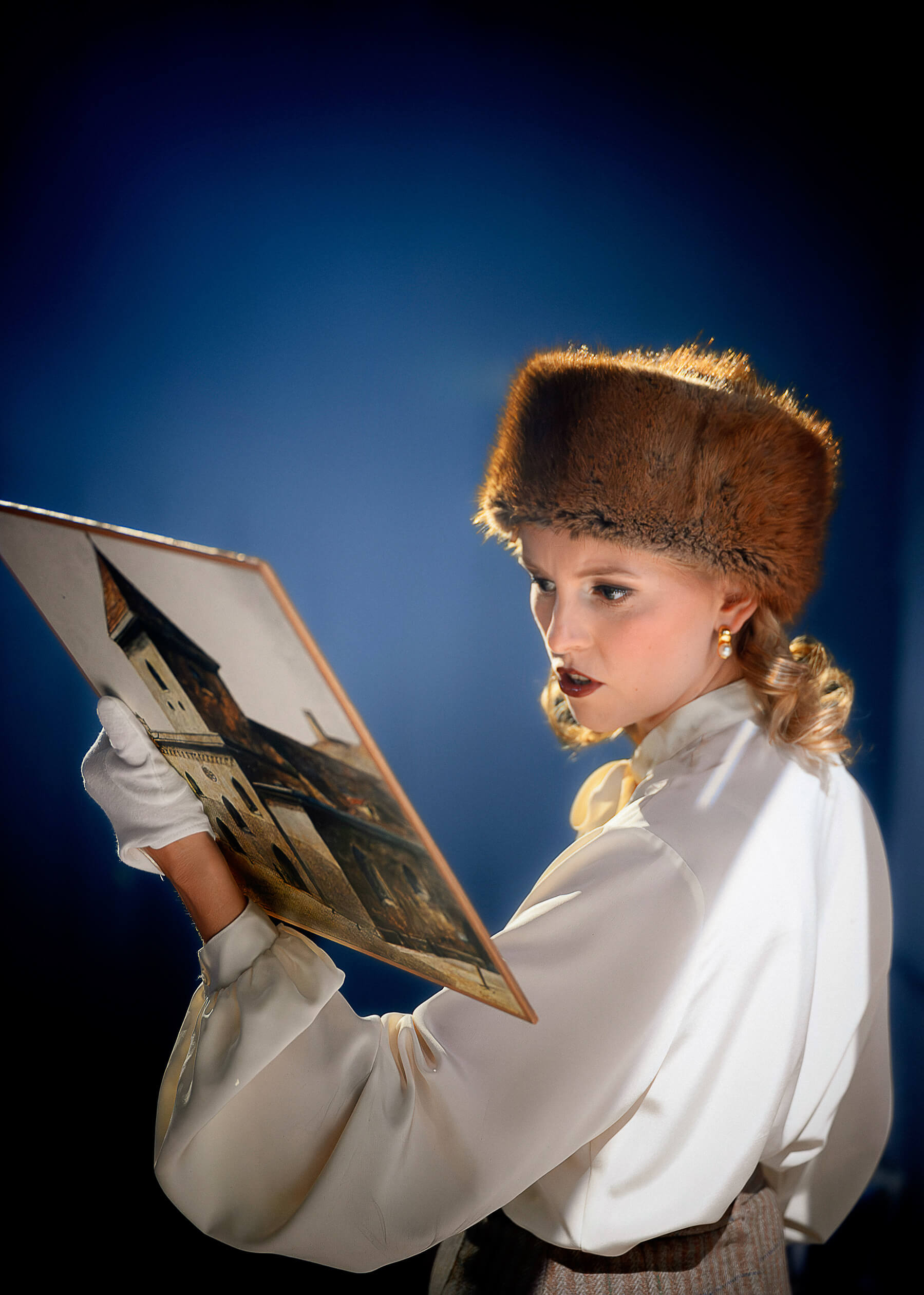
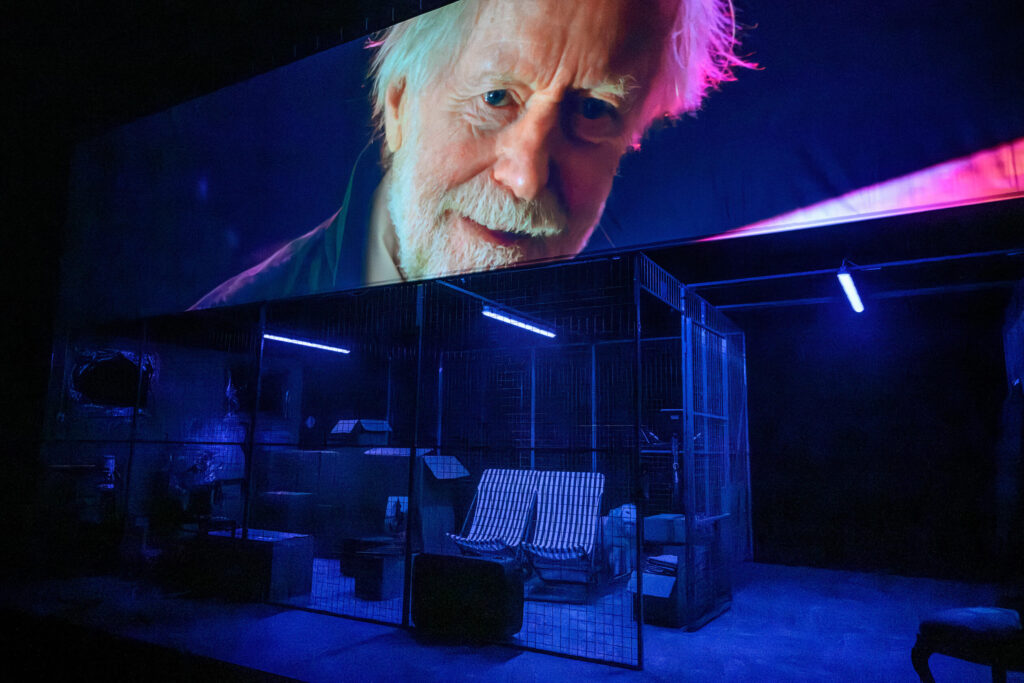
In the summer of 2026, we visited Vienna to film the Ruprechtskirche (St. Rupert’s Church). Mayenburg’s script does not place the male figure who appears in Hitler’s painting on the stage, whereas in our version he comes to life through the church. I thought it important and interesting to incorporate the real church in the work. For me, it grounds the performance in reality and reminds us that the church really exists and has done for centuries. Showing the genuine building also adds depth to the fictional characters. Video narration on the stage is a typical aspect of my dramatic aesthetic. It interests me not as video per se, but as a purely content-related element. In Nattland, the significance of the video in my design lies in how it zooms in and out. It allows us to show the father’s empty apartment upstairs, as well as the dogs’ world and Vienna. It is a space that opens a door to reality.
Anna-Maria Lipponen
Director
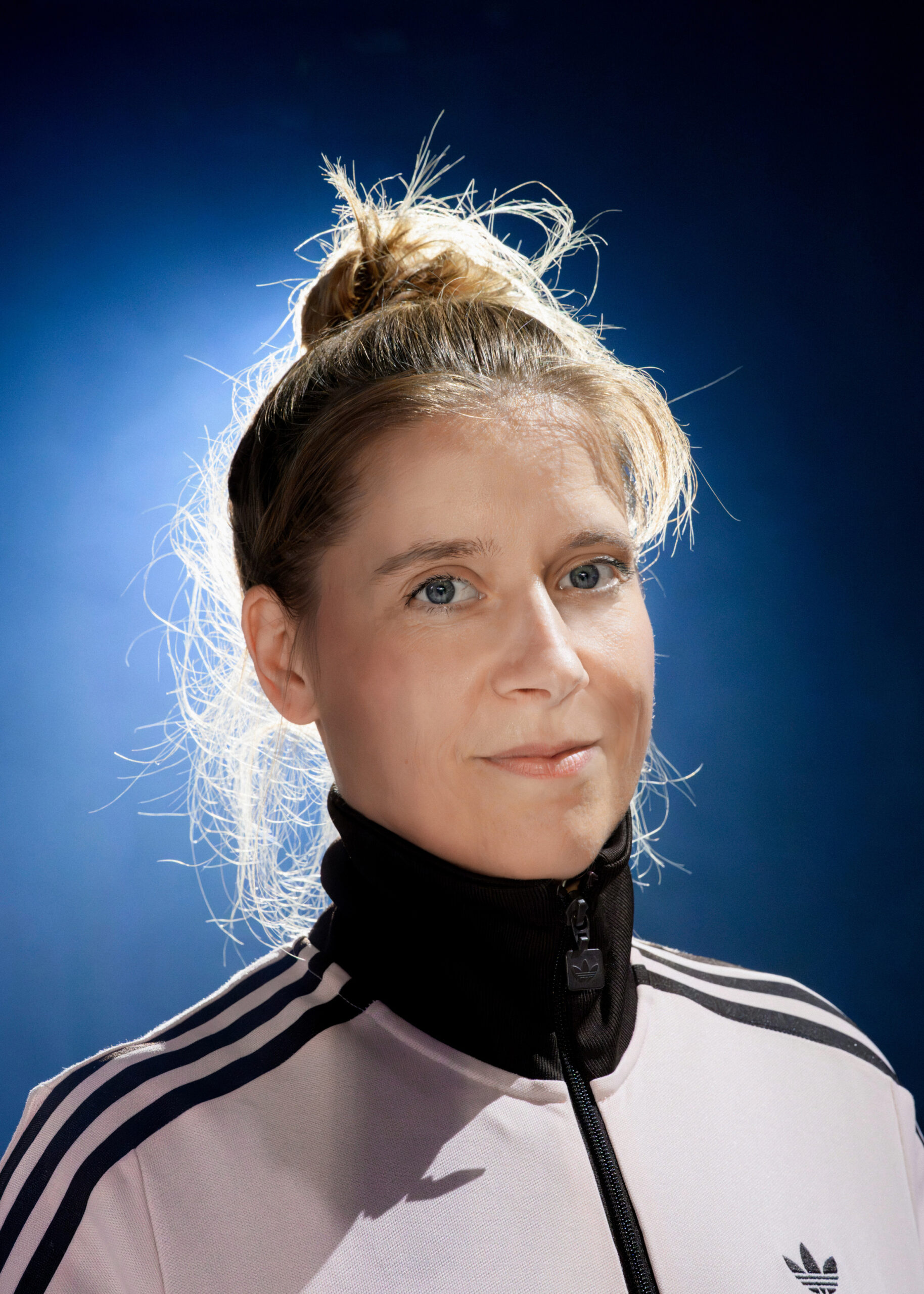
Director
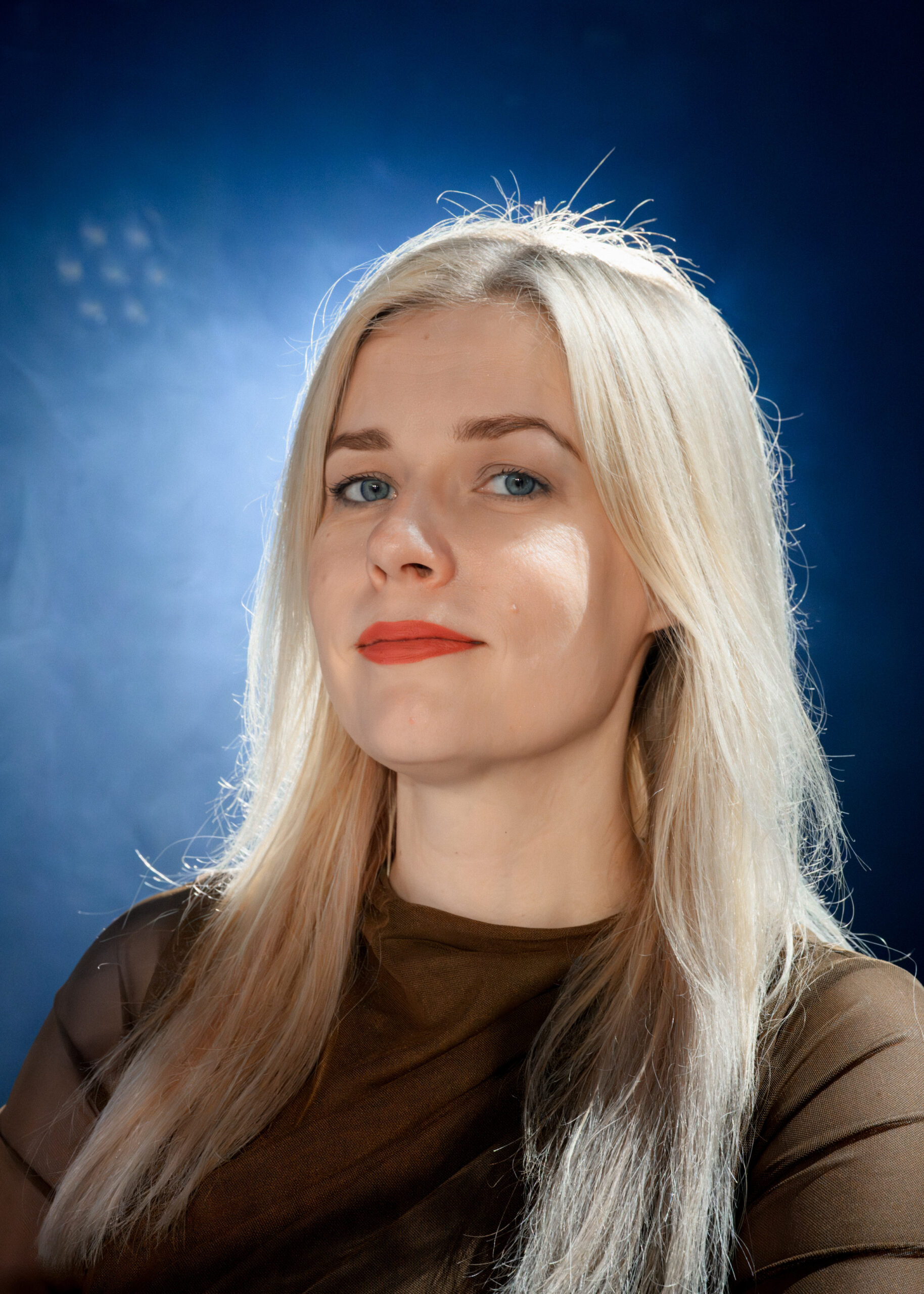
Scenography and costume design
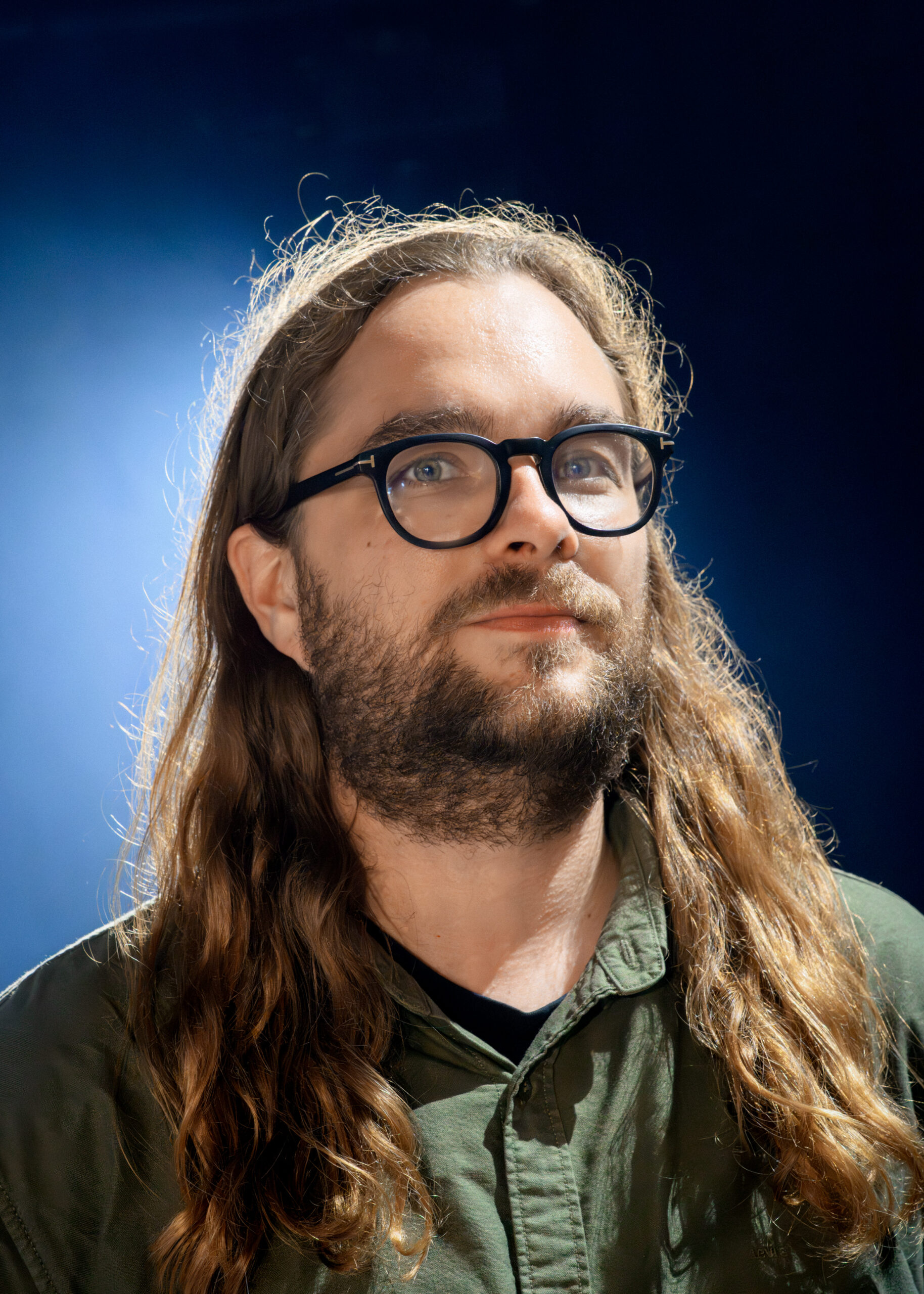
Lightning design
Sound design and music
Hair and make up design
Premiere 10 September 2026 AMOS-stage
Duration: 1 h 45 min, no intermission
Performing rights: Agency North / Colombine Teaterförlag

Evamaria
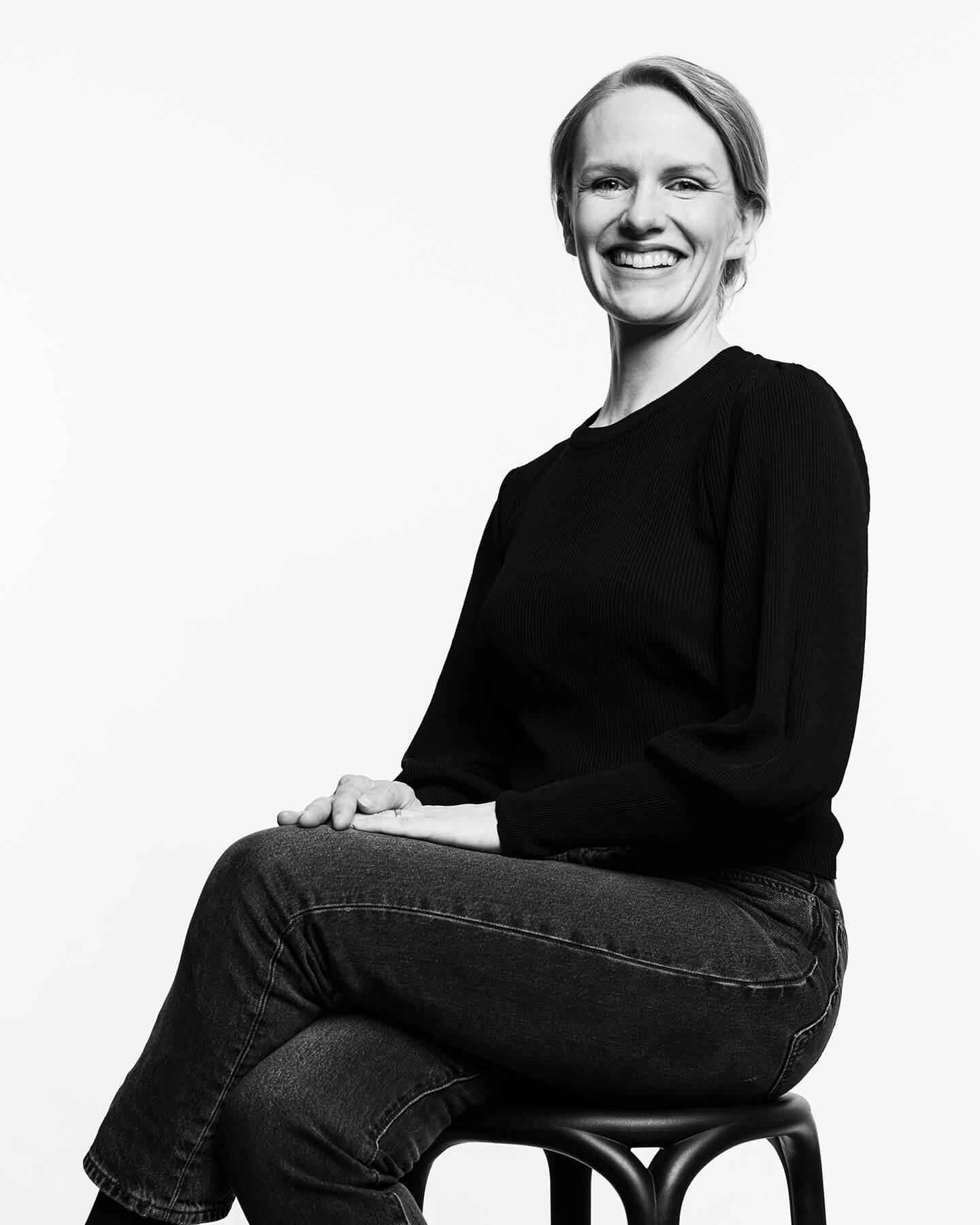
Judith
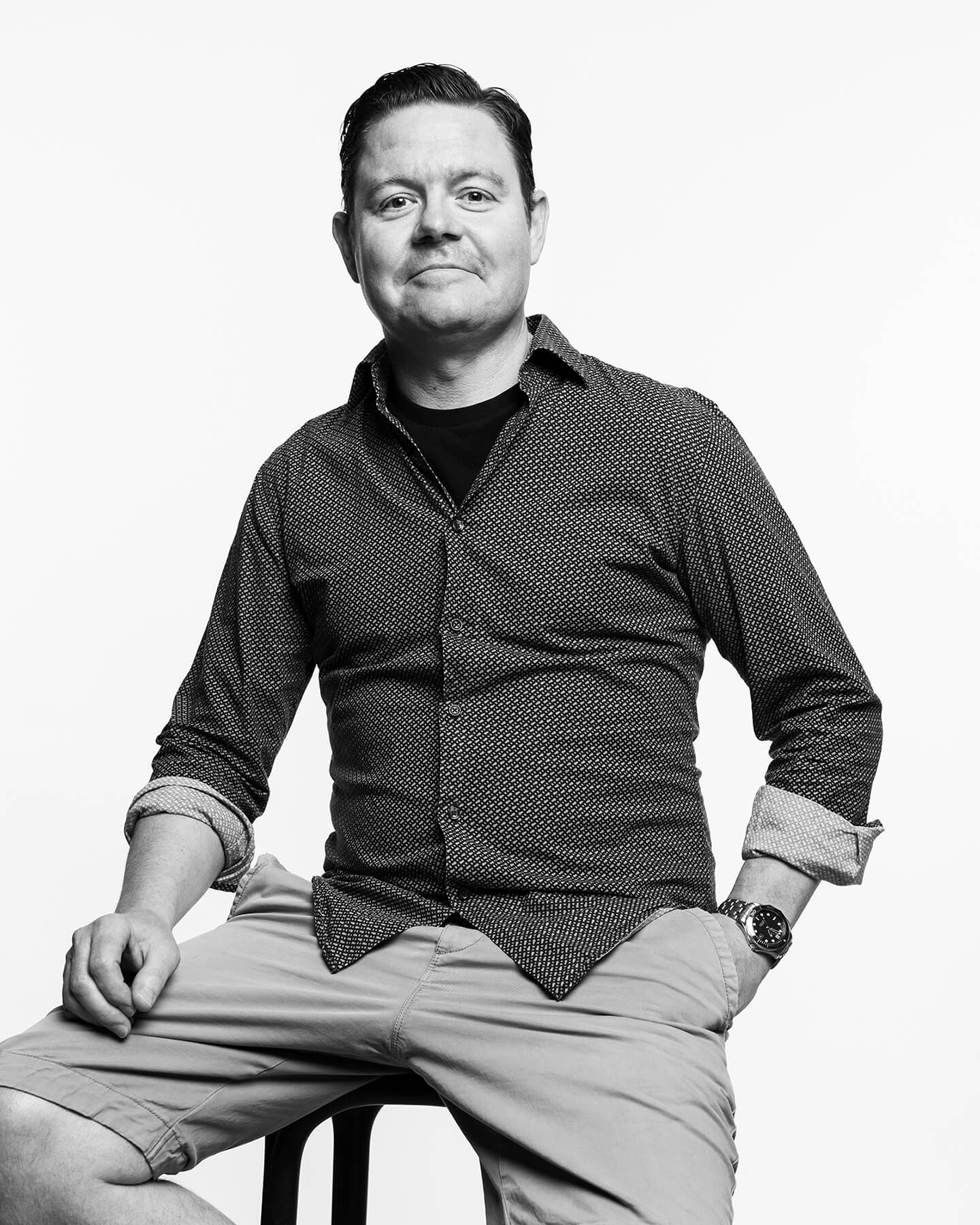
Philipp
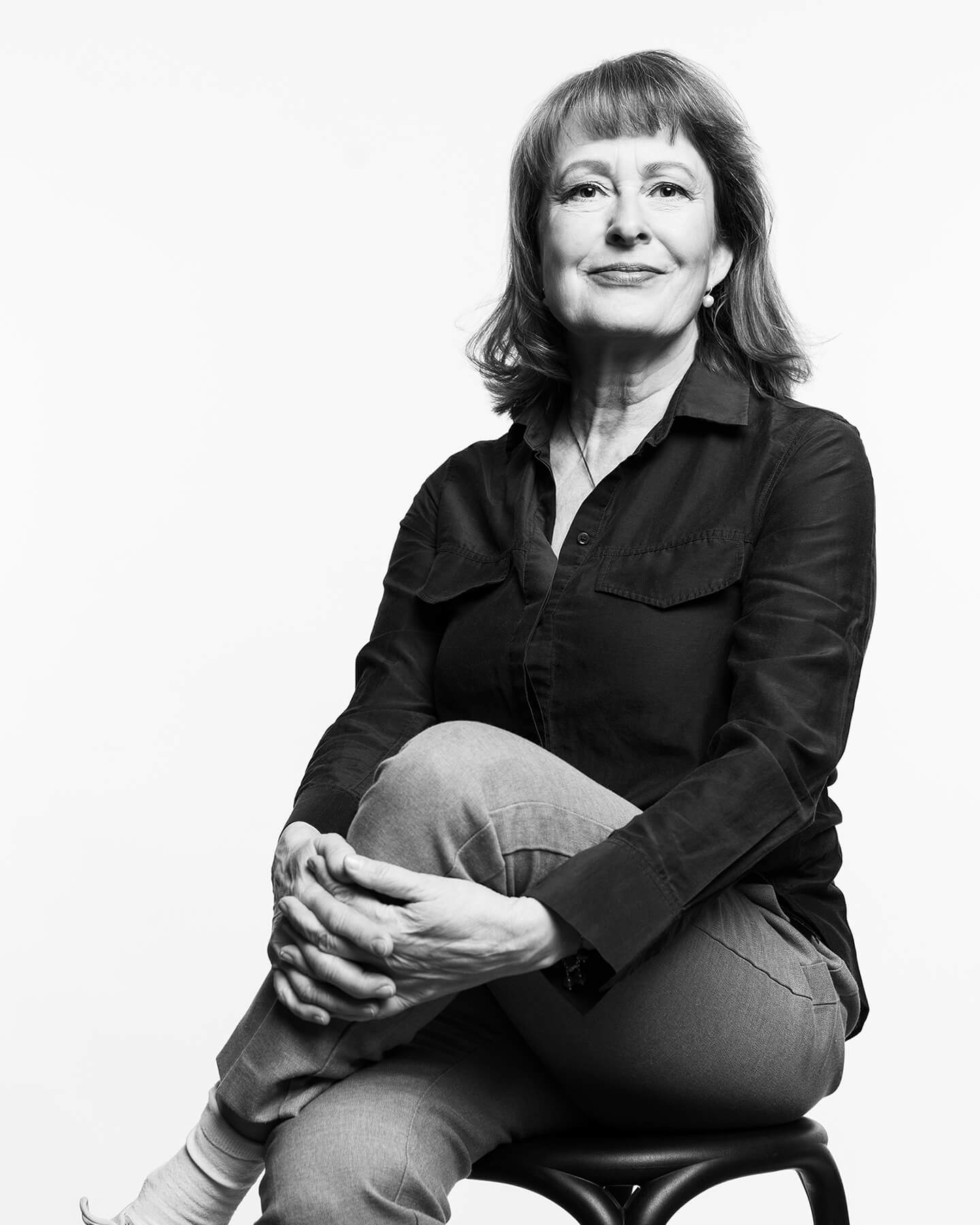
Nicola
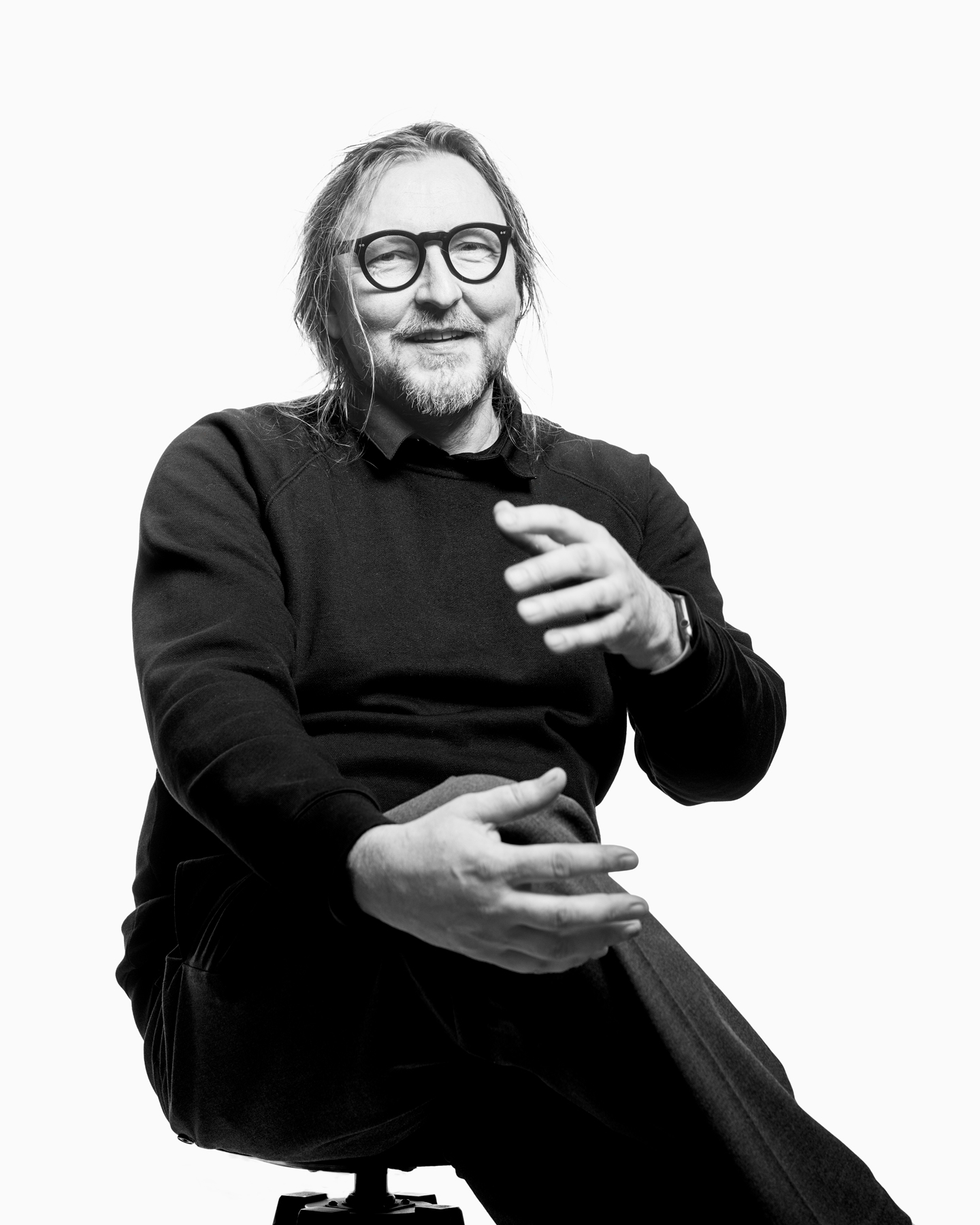
Fabian
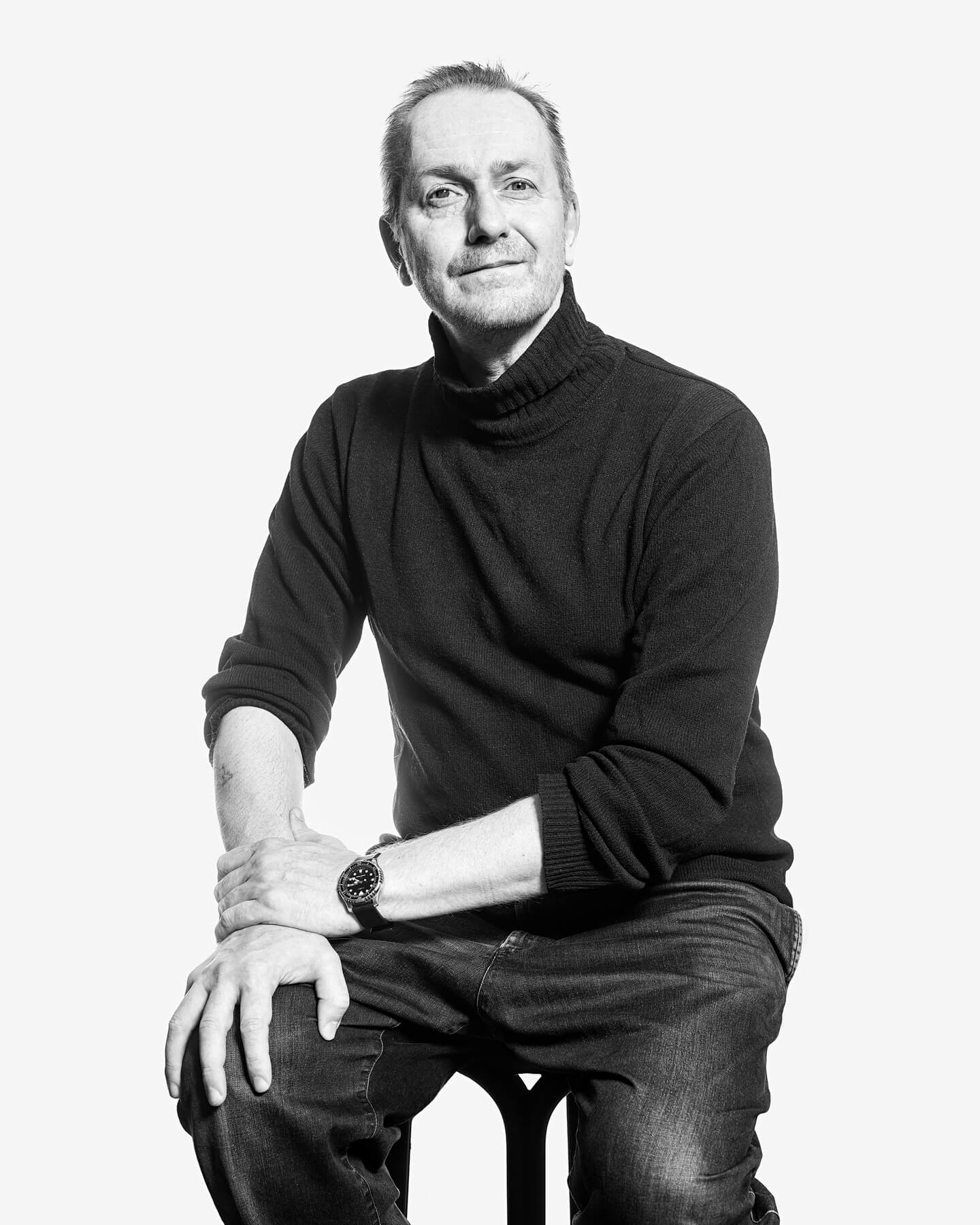
Kahl
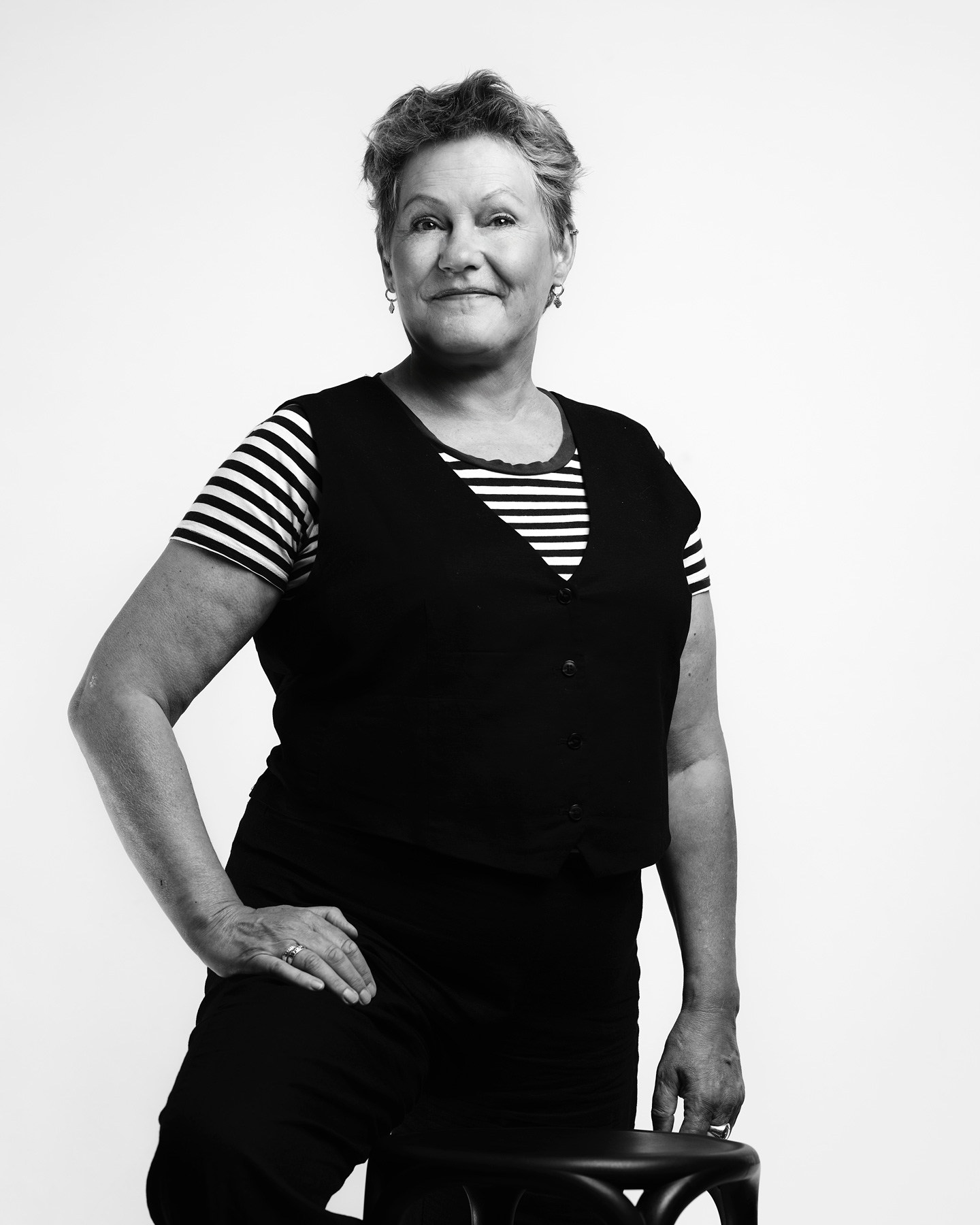
Luise (appears on video)
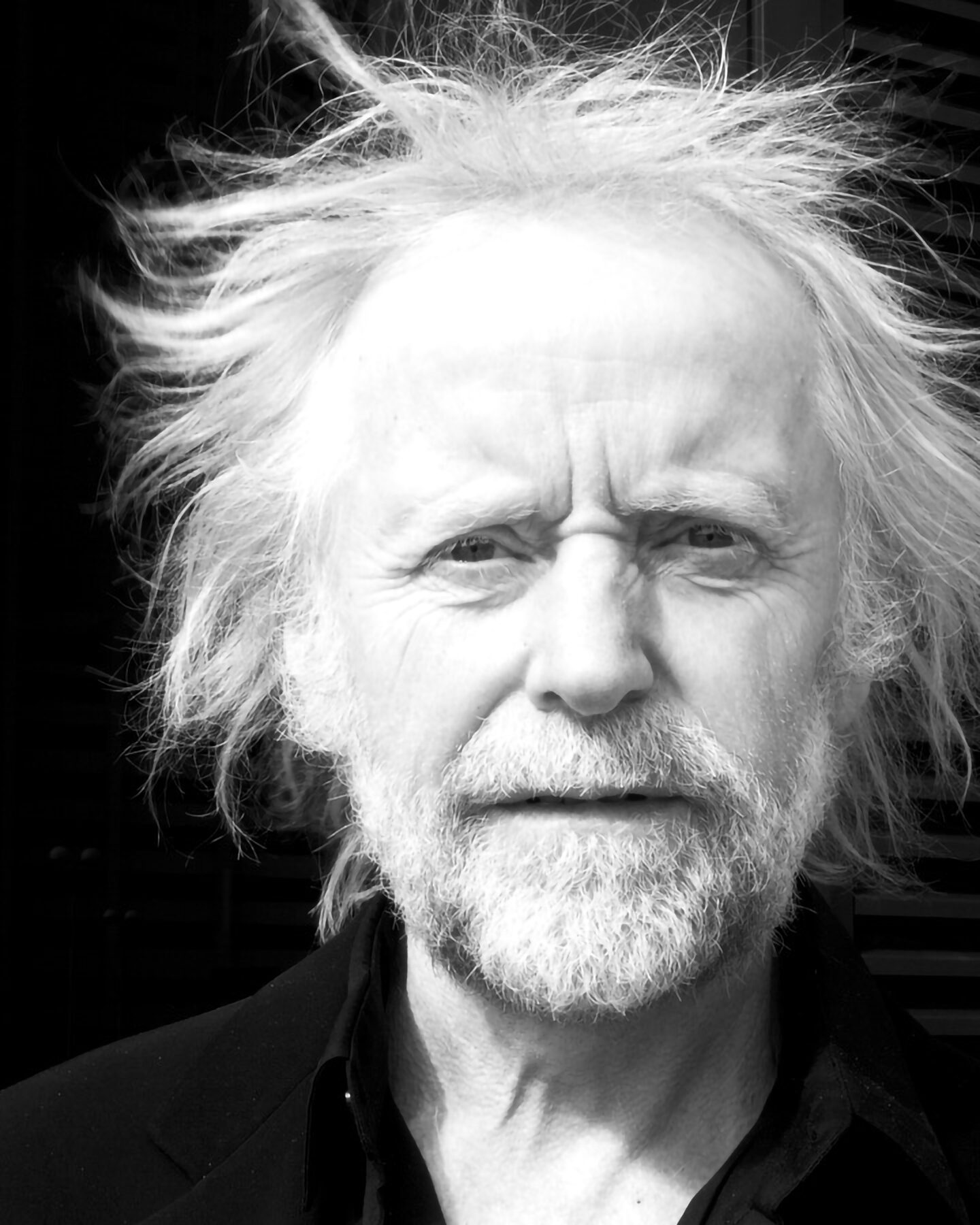
Father in Vienna (appears on video)
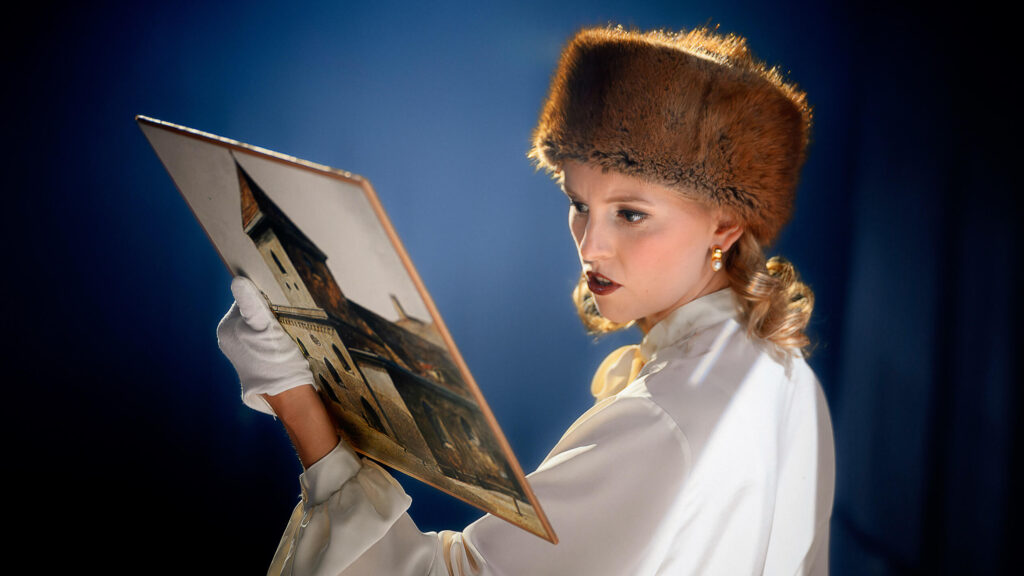
Almost everyone knows that Adolf Hitler, in his youth, used to dream of becoming an artist, before his dreams took a darker turn and went on to become a nightmare for the whole world
At the age of eighteen he travelled from his hometown of Linz to Vienna to apply to the city’s art academy. At school his teacher had noted a certain talent for draughtsmanship, but he was not accepted into the academy. His admission exam performance was deemed unsatisfactory, especially when it came to his ability to portray people. On the other hand, he was considered to have an aptitude for architecture.
One year later, after his mother died (his father having passed away at an earlier stage), Hitler settled permanently in Vienna. Initially he lived off his inheritance and applied again to the art academy, but was once again rejected.
Hitler had been deeply impacted by German nationalism during his teenage years in Linz. He admired Richard Wagner’s music and became immersed in performances related to Germany’s history and greatness. In the multilingual and multicultural atmosphere of Vienna, he became increasingly critical of anything he viewed as a foreign influence on German culture. It was probably also here he became radicalized in his anti-Semitism – in a city where a hatred of Jews was deep-rooted and had a strong political presence.
Quite soon, Hitler’s inheritance ran out and he sank deep into poverty. He took on temporary jobs and tried to make a living by painting and selling watercolours to tourists and art dealers. It is from those years that most of his artworks have survived. They are principally watercolours with architectural motifs, including façades, churches and cityscapes.
Most critics agree that Hitler’s art is stiff and lifeless; not entirely without technical merit but lacking a distinct style or artistic vision.
And yet there continues to be morbid interest in his artworks. A market exists for them and individual works have been sold for sums exceeding EUR 100,000.
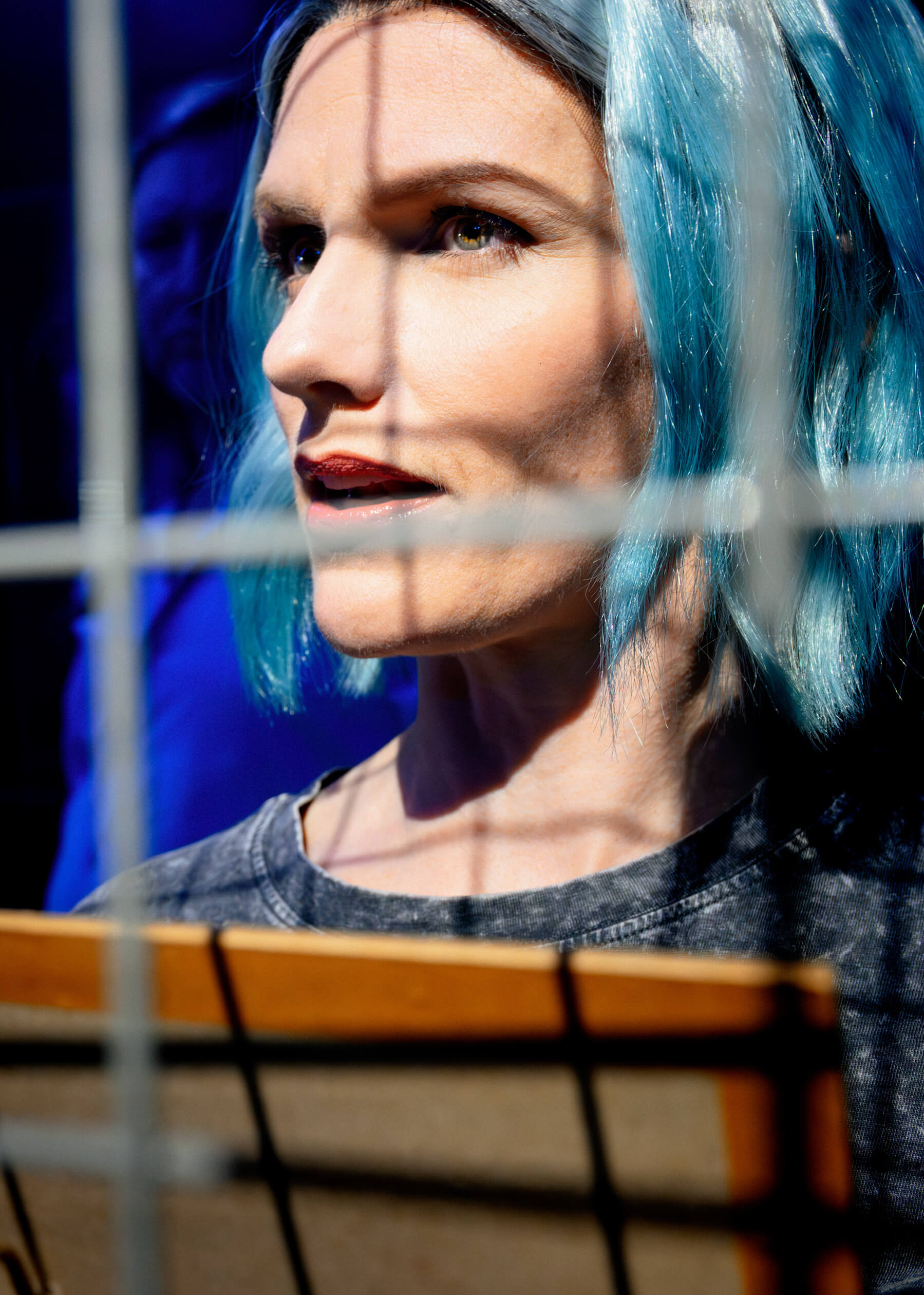
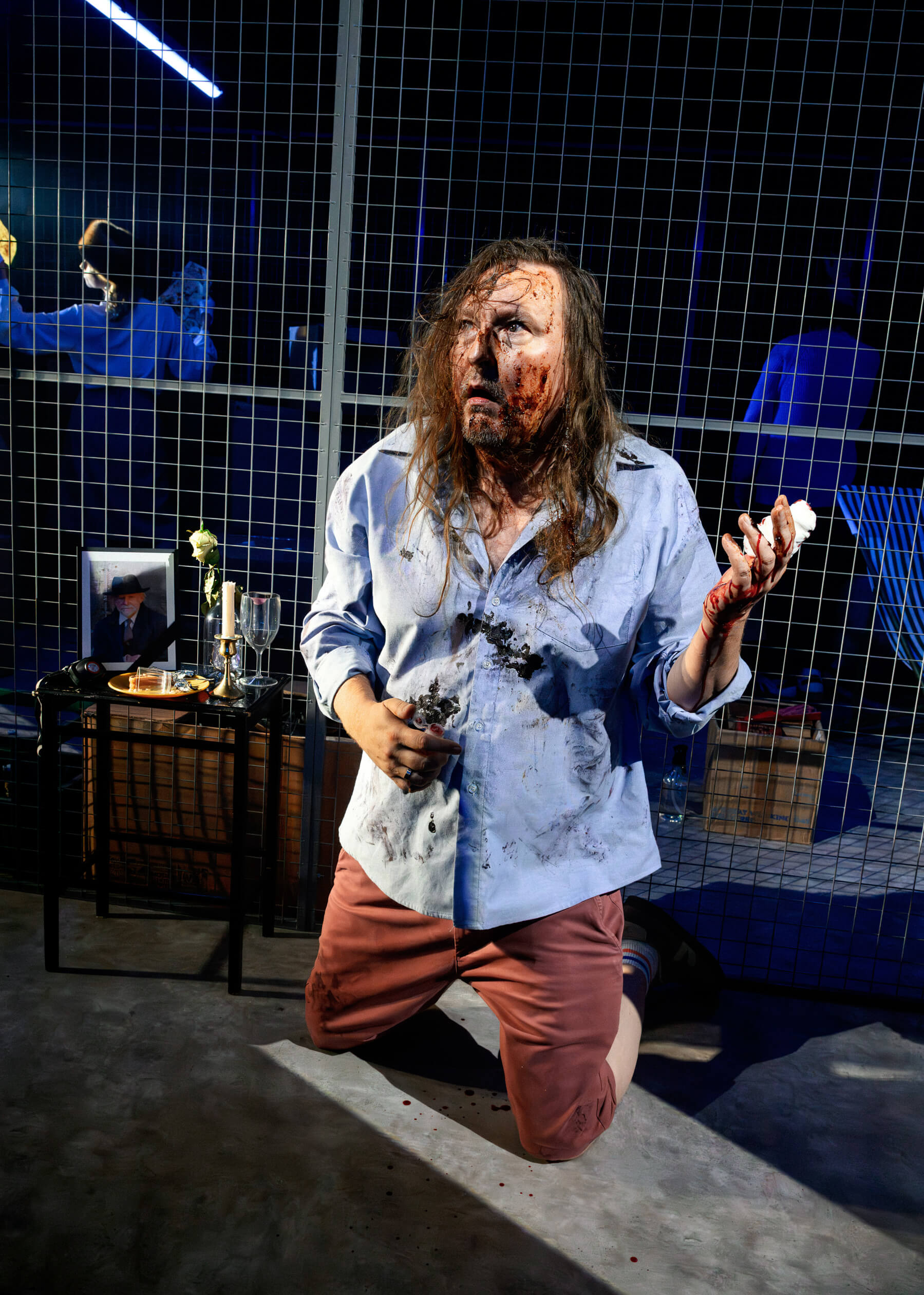
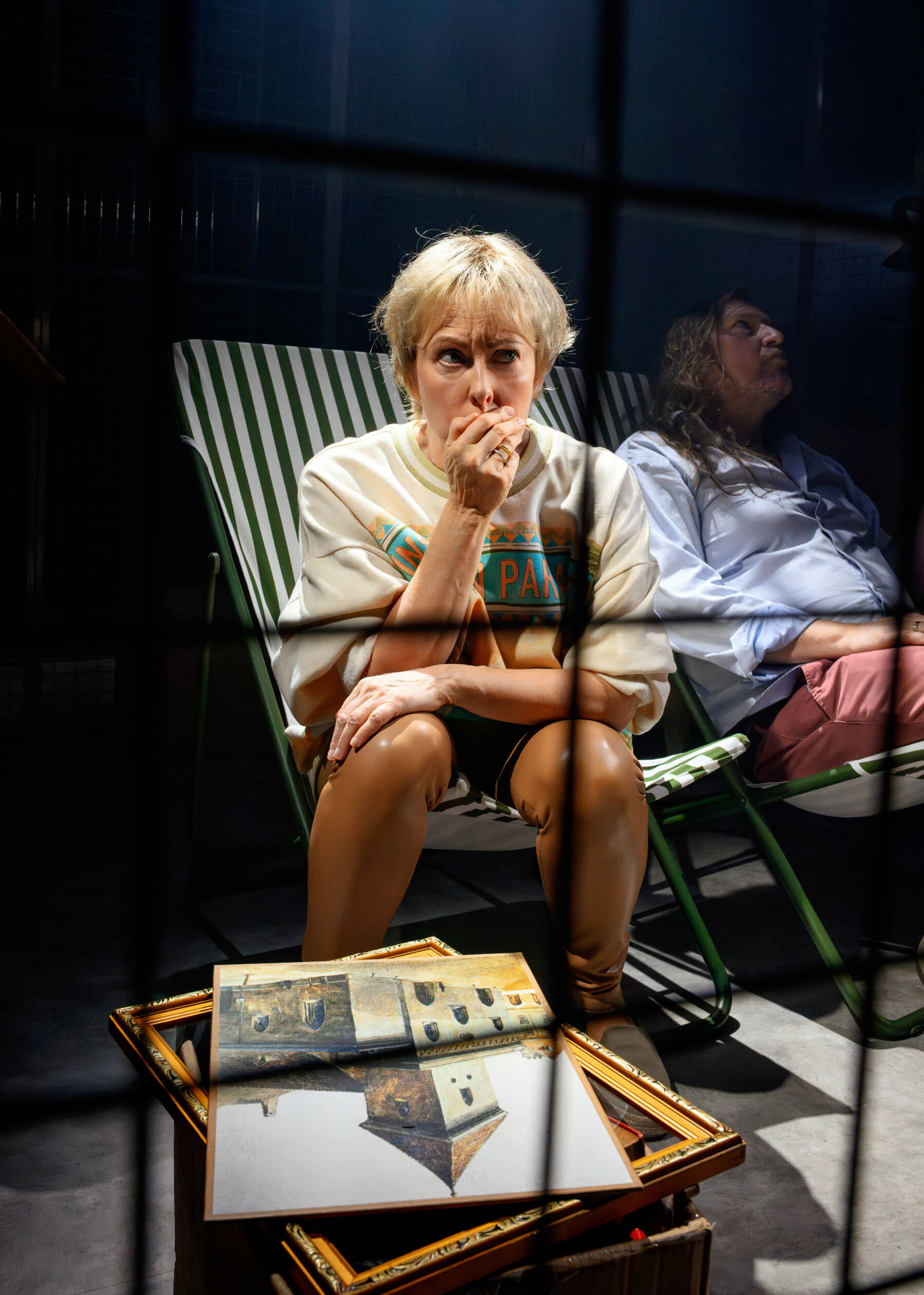
Excerpt from an email exchange between director Anna-Maria Lipponen and actor Klaus Huhle (1956). Born in Germany and now residing in Vienna, Huhle appears in the production via video.
ANNA
Hi Klaus, how are you doing in Vienna?
In recent weeks I’ve been thinking a lot about one of the main themes of this performance: Germany’s guilt. I started pondering whether it is something that really affects German people, or is it more of a social phenomenon?
I have noticed that in politics – at least from my perspective as someone who follows German news much less than news from Switzerland and Finland – Germany’s current stance with respect to Israel seems to recur as both a passive and an active item. I may be exaggerating here, but it all seems to reflect a listlessness and a lack of courage to move on from the guilt caused by the Holocaust. Or at least that’s how people in Finland interpret it. How do you see this from a German point of view? After all, you are German by birth, despite living in Vienna. Surely no one can deny that Israel is currently carrying out genocide and replicating what happened to the Jewish people under Hitler. Why is this still such a difficult issue for Germany? How long must the German people feel complicit, thereby shutting their eyes from this new genocide?
KLAUS
While I lived in Germany, I never had close contacts with members of parliament – with some exceptions, of course. It seemed to me that both individual and social reactions to the Holocaust were always superficial. Awareness of genocide to its full extent requires a considerable level of hatred towards the perpetrators and a solidarity that is evident in everyday actions with any friends or relatives who have been affected by it.
In my opinion, generalizations regarding Jewish and Palestinian people are unhelpful. People in Israel have continuously demonstrated against Israel’s imperialist politics and its murderousness – and they continue to do so.
The fact that Germany’s current federal government has failed to show solidarity with the demonstrators in Israel is due to economic links with Israel and with Middle Eastern politics as a whole.
But among the German Left, the Greens and some Social Democrats there are many contacts with the anti-Netanyahu protest movement. In this context, the history of the Holocaust plays a smaller role than the arrogance of the EU’s Middle East policies or its long-standing support of the United States in the Middle East and the Palestinian genocide in both Gaza and the West Bank. I can’t see any overarching “German” stance towards the topic, but rather a political and economic position. It is hardly different in Finland. Generalizations based on nationality are neither well-informed nor reach the crux of the issue. I fear that a return to nationalism is a dangerous path that has already led to many wars and much ignorance and destruction.
ANNA
In Nattland, Mayenburg writes a lot about the culture of silence. We Finns know a lot about that. But despite being experts at silence, when we speak, we speak with directness. I have often heard that when first meeting a German person or during small talk with them, one must steer clear of religion, politics and, especially, the Holocaust. I don’t know what the advice regarding Finns would be, but in my view, the only way to solve the world’s major problems is to face them, speak about them, move towards what is new and scary, and get to know other people and their ways of thinking; to try to understand things that may seem difficult.
KLAUS
All Germans are different, so I recommend going into dialogues without prejudice. Prejudice is of no use, even when debating with right-wing extremists.
On the other hand, the leadership of the right must be publicly opposed, pointing out time and again their lack of content beyond lies, exaggerations and posturing.
ANNA
It feels like these days people are going in the opposite direction, taking refuge in their own bubbles. I’m thinking that with the accelerating rise of right-wing populism and radicalism around Europe, which is reflected in the growth of AfD in Germany, isn’t communication what we really need right now – stories about people? Isn’t this the time to speak about the Holocaust, about people’s fates during the Second World War, to tell stories that touch people and make them feel something? Seeing a packet of mince is unlikely to turn people vegetarian, but meeting the animal that has ended up or is about to end up in that package is likely to elicit a different kind of feeling. Or at least it has the potential to do so. It is easy to hide behind terminology and generalization: the Holocaust, concentration camps… That was all back then, surely it has nothing to do with us anymore? And yet the continuum is still there. Isn’t this the time to talk honestly about these things? What are your thoughts?
KLAUS
Communication and clear stances when it comes to resistance are some of the most enriching and joyous things there can be. On the other hand, resistance has never been a widely applicable term. Perhaps more appropriate concepts are needed for the left-leaning, humanist way. The right with its slogans has won a great deal of sympathizers. All patriotism will sooner or later lead to war, and this befits our current scenario well. Lies and embellishments related to war form a part of the right-wing logistic. Genocide, racism, patriotism and patriarchy all fit together and immediately arouse strong feelings in any discussion. This reinforces the resistance against right-wing opinions and creates feelings of joy and meaningfulness.
ANNA
What has been your experience in life: have you had to keep silent on these topics? Were you brought up in a culture of silence?
KLAUS
Until I was around thirty years of age, I was almost unable to speak about the war with my father. It was the same for my friends. I finally understood that it derived from a kind of pact of silence among perpetrators, rather than from a personal problem between myself and my inadequate father.
Since the age of 21, I have lived in various kinds of collective projects. Currently the Wohnprojekt in Vienna. You are most welcome to drop by. Similarly, in theatre and film I always work freelance or as part of a collective. The public space is very important for me. Its vitality must be maintained.
ANNA
And what about guilt over what has taken place in Germany’s history. Do you feel any?
KLAUS
No. Or perhaps a little. At least I do always feel compelled to take a stance and demonstrate my attitude.
ANNA
And finally, as we are involved in making theatre, a question about Nattland: when you first read Mayenburg’s original manuscript, how did you feel about the picture of humanity that he presents therein?
KLAUS
Conflicted. Still. Material things and all the talk about them constantly distract us from enjoying and talking about the moments that genuinely bring joy. Mayenburg is mostly involved with the private sphere, with personal family relations and the need to protect them from the outside world, even when there is nothing to protect. But the old maxim of the personal being political stands true even here. And Mayenburg is similarly conflicted.
ANNA
You have yet to see any part of our version on stage, but what would you hope to see in my direction?
I hope you make choices that you then have to wrestle with. The play is full of existential questions. Even my aimless wanderings through Vienna were characterized by a constant, restless questioning. And the feeling of “If you’re alone, they can repress you.”
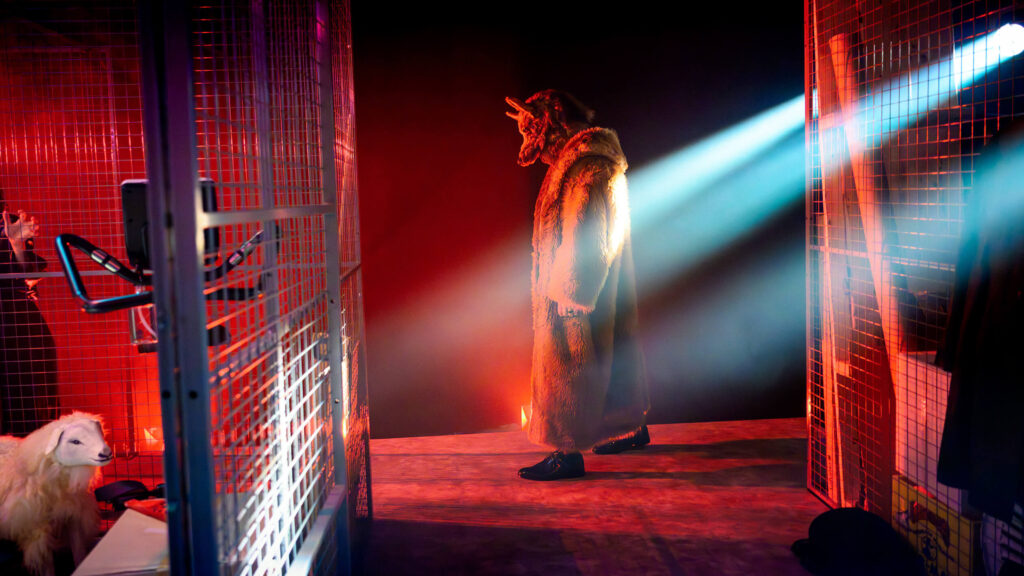
The music in the production incorporates themes from Richard Wagner’s Faust Overture.
Let yourself be immersed in the music created by sound designer Johanna Puuperä. We recommend listening with headphones.
0 / 0
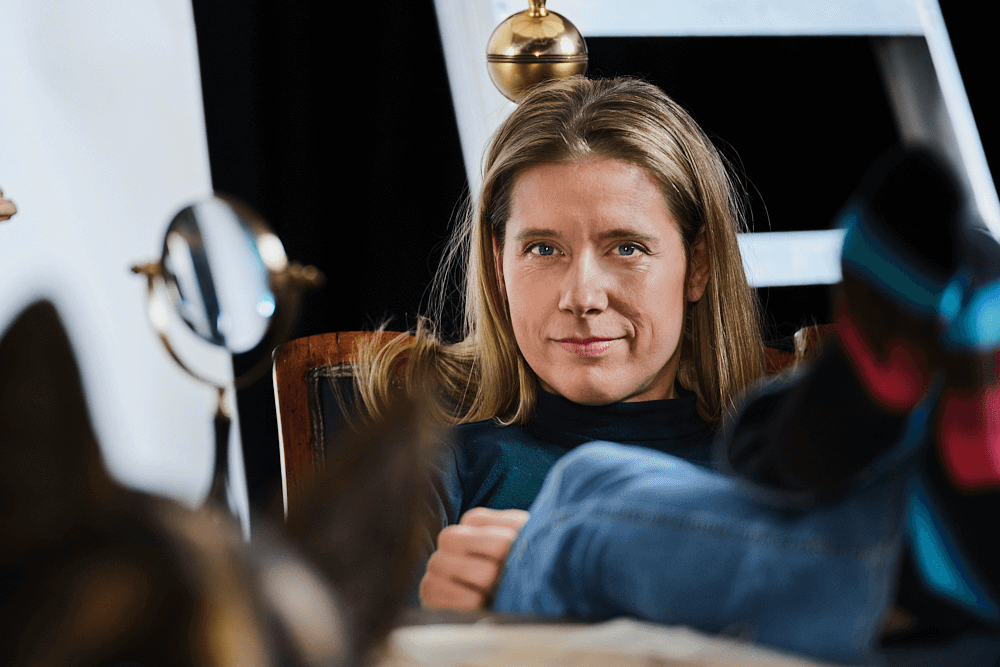
Anna-Maria Lipponen is a Finnish director, actor (FIA), and author based in Zürich, Switzerland and Helsinki, Finland. Since 2018, Lipponen has built an international career in Central Europe, the Nordic countries and the Baltics. Her directing work has been seen in both institutional theaters and in the independent theatre field. Lipponen’s works are multi-layered total art works, where in addition to a strong narrative, elements such as physical acting, cinematic video storytelling, and multi-dimensional scenography and sound design play a significant role.
In 2021, Lipponen began her directing studies at the Zürcher Hochschule der Künste and graduated with a Master of Arts in Theatre (MA Regie) in the spring of 2025.
As a director, Lipponen is drawn to themes such as freedom, power, and societal roles. Her works often feature strong female roles through which she portrays the world. Animal characters are also a recurring element in her works.